Episode Transcript
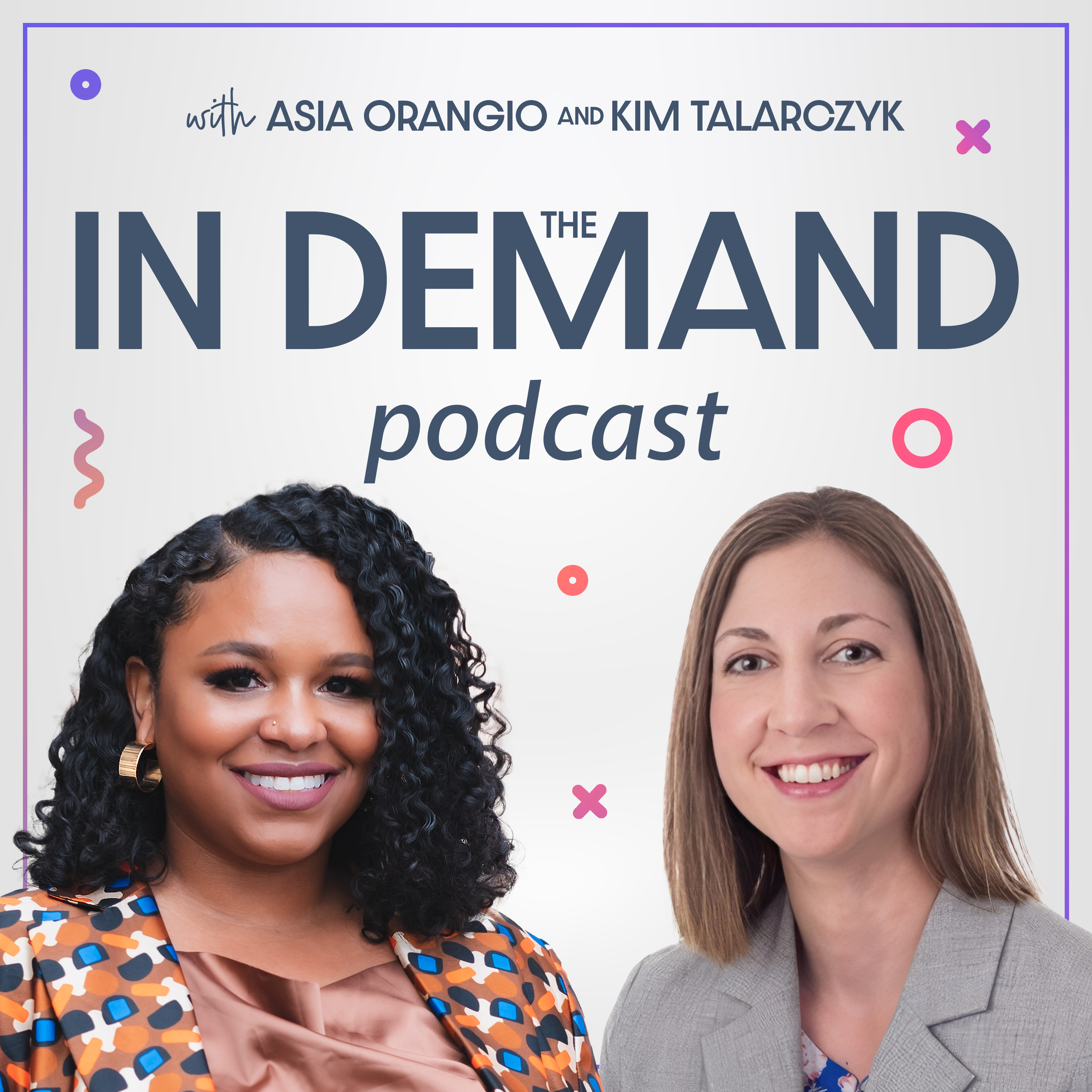
[00:00:05] Asia Orangio: What's up, founders? And welcome to the In Demand podcast where we talk all about how to troubleshoot growth for your PLG SaaS. I'm your co host, Asia Orangio, the CEO and founder of DemandMaven.
[00:00:15] Kim Talarczyk: And I'm Kim Talarczyk, client services manager at Demand Maven, where we help SaaS companies reach their toughest growth milestones.
[00:00:22] Asia Orangio: All right, Kim, let's get into it.
All right, we are here for another Asia and Kim reacts. This is our first one together though. Yes, this is our first one together. I'm excited. So basically the premise of this episode is that Kim has a couple of stories that she wants us to go through and we are going to react to them and give our thoughts, give our feedback and kind of talk through what's going on. We have, I think both of these posts are from the subreddit RSAs, if I'm not mistaken.
[00:00:56] Kim Talarczyk: Yep.
[00:00:57] Asia Orangio: Okay. Okay. From what I've seen of this particular subreddit, lots of early stage. Lots of early stage folks, so think like oftentimes less than even like 10k NMR, sometimes pre product.
So yeah, I'm excited to see what we hear and yeah, I guess we can kick it off.
[00:01:16] Kim Talarczyk: Yeah.
[00:01:17] Asia Orangio: All right.
[00:01:17] Kim Talarczyk: We're going to start with a niche Sass will never die or niche from alone AD3375.
So I'll read the post. I have been seeing a lot of niche SaaS getting developed. For example, today I saw a SaaS for collecting payments and invoicing for recruiting firms. I have a firm belief that if I build a B2B SaaS in a niche, that solves that one specific problem of that niche business. Instead of trying to go mass market from day one, the SaaS shall grow. It's also applicable for services too. Would love the thoughts of people who have experienced this.
[00:01:54] Asia Orangio: Yeah, this is an interesting one. So I want, I want to break down very quickly the difference between niching versus focusing, because both are viable ways to kind of think about entering into a market.
I think a lot of the desire here, when you think about starting a company, you do have to kind of have a little bit of like a come to Jesus moment about what is actually important to you as you start this business or as you start this SaaS.
Is it you want to just make like 10k and call it a day? Is it you want to get to a million and call it a day?
Are you trying to get to a $100 million company? Do you have desire to build a team to grow?
What are Your actual desires. Because that has a lot to do with how you think about what you build and who you build it for.
So when I hear the word niching, I hear, yeah, you're going to build a SaaS for a very specific market and you are likely not going to enter into other relatively big markets. We'll say, I'll give an example. It's. I'll give a couple examples. I use these examples all the time because they're just the easiest, I think for me to one recall, but also to explain.
So there's CRM is a huge software category, customer relationship management. It can be applied to virtually any industry.
Particularly in B2B, there's Salesforce, which is one of the largest CRMs in the world. Huge can apply to many different verticals, many different industries.
And then there's like super niche CRM. So think like there's a CRM just for truckers, just for trucking companies. There's a CRM just for them. CRM for trucking.
There's actually, gosh, this business actually does exist and I, I'm gonna forget their name actually. It's not coming to me. But there is like a trucking CRM out there. It's just for trucking companies. When you niche, one of the fundamental questions that you have to ask is how committed are you to that niche?
So are you. So your CRM for trucking, are you gonna stay trucking forever? Are you gonna expand in the logistics industry or transportation industry? So for example, you could go from trucking to rental car management or like, like there are all kinds of other adjacent industries that you can get into.
And then the second thing to ask is, what are you most going to be satisfied with?
And, and also too, I ask that because there are some niches or niches that don't grow very fast or at all. Some are actually contracting, but it's still very much possible to build a business and have that business sustain you for the next 5, 10, possibly even 15 years, even if it never grows beyond 10k in MRR or 25k in MRR or 100k in MRR. So those are the kinds of things to be thinking about.
The difference between that, to me then let's say focusing, which to me is different. Focusing is you're not going to commit yourself to a niche forever, but you may sequester what we call a beachhead, which means this is a part of the market that you're going to focus on for the next, let's call it two to five years. The best example of this in public that we've seen is ConvertKit, now called Kit. So when Nathan Barry first started ConvertKit, he wanted to build an email marketing platform and a marketing automation platform for, for the market.
He wanted it to get as big as he possibly could. It's now, I think a billion dollar company, if I'm not mistaken, if not more. I can't remember if they've IPO'd or not. I don't think they have, but they're huge and largely bootstrapped. If I recall correctly. Nathan might've taken on some funding, but I, I, if I recall correctly, they are primarily bootstrapped. But when Nathan started, he said, he didn't say, I'm gonna build a marketing automation platform for the world. He said, I'm going to start with a beachhead. I'm gonna focus on these people for the next two to five years and then as I grow I will expand my focus.
And he started with, if I'm not mistaken, food bloggers. He just started with food bloggers. So he started in an influencer space and he just focused on food bloggers to start. That's a really specific part of the market, really specific segment. And then he expanded over time. Then he moved over into travel blogging and then he moved over into people who do. Oh gosh. So there's food, there's travel, there's a third that's like part of this trifecta. I'm going to totally blank on. I want to say it's like politics or finance related, but I thought it was more fun than that than either of those. But you can kind of see how it goes from food and travel.
There are other like cultural fashion. That's what I'm thinking of. It was fashion, fashion bloggers. And he, so then he starts to kind of build his beach head over time and he starts to go to market into more and more of these focuses until eventually ConvertKit becomes this creator brand that focuses on creators, people who create things for a living. And there are a bajillion different types of creators. If you were to go to convertkit or kit.com now you were to go to Kit's website right now, you would see all the different types of creators and brands that they support.
Everyone from like influencers to consultants, like me to, you name it. There are just so many different types of buyers and users and they are somehow uniquely different than like the mailchimps of the world or there was another really popular one.
[00:07:31] Kim Talarczyk: Oh gosh.
[00:07:32] Asia Orangio: Brennan Dunn was a big user of this one email marketing platform and I'm not gonna remember what it was called back in the day, but this was before I think his working with like ConvertKit.
But all that to say that's what we call focusing now. Nathan is a high achiever, very highly motivated person.
He is also someone who he, I don't know that he would have been satisfied with. Just I'm an email marketing platform for food bloggers and that's kind of why I say you've gotta be really clear about what you're gonna be satisfied with. Even if you don't know, you don't know. But also too you know, Nathan was motivated by building a team. Nathan was motivated by creating something in the market. He really wanted to get as big as he possibly could while it's still being reasonable. I also will say I don't think Nathan is like a growth at all cost person. I've never actually met him but based off of everything that I've I've read about him from him, he gives the vibe to me of like he's going to grow it as big as he possibly can while it's still being fun and maintainable for him. And when it's not, he'll look at other options and solutions. I think Hilde from Balsamic is someone very similar. The guys over at Base Camp, I think they're in a similar position as well. Like they want to grow it as big as they possibly can while it's still being fun and maintainable.
So all that to say this conversation about like focusing versus niching I think is interesting. A niche is a great way to get started. I but again I think you, you have to get really clear and ask yourself questions about like what are you most going to be satisfied with? Because some niches don't turn over often enough for it to be viable.
But viable is a is a word that you kind of get to define if you're bootstrapped.
Viable might mean something different to a VC than it might mean to a bootstrap founder than it might mean to an indie funded founder. If a company only makes 1025k per month ever and that's about as big as you get without, you know, putting considerable amount of energy and effort to keep, to keep growing. And if you can continue making that amount of meat money for the next 10 years, that might be worth it to you. That might be dismal to someone else. If I told Rand that ran to Fish can you know a spark Toro previously Maz he'd Be like, that sounds boring as hell.
I'm kidding. He might not actually. He might be like, I'm comfortable taking, you know, just like a cool 15k if it only cost me like a hundred bucks a month to like serve. But he probably wouldn't put his energy there. He'd probably go and build like 20 other products and you know, whatever. But all that to say like some, that that may or may not dictate your choice, but in the bootstrapped world, you can kind of do whatever you want so long as it doesn't, you know, make you go bankrupt. So I really, the question is like, what do you actually want to achieve or accomplish? Because you could make such a quiet, cool amount of money just by doing that. But generally I do agree. I think the, what makes us successful is your ability to get really clear on if you like that niche and if you like those people. Because I've also seen founders try to build something for people that they don't actually care about. And that's also hell. That's hell on earth because you don't actually care about helping those people. And you don't. Even if you never were that type of buyer, like, even if. Which is a really common scenario where like founders will build products that they wish that they had had. If you pick a niche, you may never have ever have experienced a problem. So you may not have as much empathy for those people.
So your success is also going to be primarily determined by how much empathy you're able to deploy for people that you've never been in the shoes of something to think about. But again, you know, I think those are the biggest considerations.
[00:11:00] Kim Talarczyk: Yeah, my initial thought was like, it's a little bit of a duh. I mean especially like a.
And maybe just because we see so Many founder led B2B SaaS companies and it's like you're solving a unique problem for a small group of people.
Yeah, you're messaging, you're learning about them and messaging to them directly and then you can expand from there.
Like, how else would you start?
[00:11:28] Asia Orangio: Kim is such a straight shooter. She's like, duh, start there.
[00:11:31] Kim Talarczyk: Duh.
[00:11:32] Asia Orangio: Easy.
[00:11:35] Kim Talarczyk: Yeah. I mean, but like the giant companies are doing their own.
They're touching on like a salesforce is figuring out how to communicate to all industries and buyers in different ways. Right. And they have tons of money and they can, they can do that.
[00:11:52] Asia Orangio: Totally.
[00:11:53] Kim Talarczyk: It's a little bit different, right, For a smaller bootstrapped or seed funded SaaS.
[00:12:01] Asia Orangio: Yeah, completely.
I'm curious what the comments Say. So there's, there's a lot of comments on this. Well, to me it's a lot, but like 20 or so replies, let's see.
Okay, this is 100% true. The only thing that matters is that you solve a real pain for a customer. If you tailor your product for a specific niche, it makes a sell that much more likely. Build the niche product, get on a call with 20 people that in that niche, get their feedback and ask them to put a credit card on file. If they won't, ask them why, get them to help you improve the product and positioning. Yeah, yeah, I think like the only consideration. Okay, so there are times where I would say this doesn't work.
It doesn't work when you pick a niche for a particular subset of people or sorry, you pick a niche, you build a product or at least you conceptualize a product. Maybe you haven't even built it yet. You're just trying to get, you know, some validation. We already talked about idea validation in a different episode. But maybe it's like sometimes you, you can identify a niche and you, you can have a concept for a product, but you might find that in order for them to even consider that product, it would need to be pretty expansive. So for example, healthcare is a really tricky one if you are targeting. This is one of the hardest market segments by the way.
And it's not for the faint of heart. Like you really have to be, you have to be extremely dedicated to this segment, this industry for you to find success here. But the healthcare segment, particularly if you're selling to like hospitals or certain types of facilities that are very, I'm gonna call them high energy because it's the only, like they're like, they're chaos. Generally speaking, there's, there's doctors, nurse practitioners, like, there's just a lot going on. Emergency rooms are hyper chaotic to me they have to be very well oiled for them to work well, obviously. But, but there is a certain level of chaos where doctors are like making business decisions. Like, particularly if there aren't any operations people, if there are ops people, great. But even they tend to have like extremely chaotic environments and it's hard for software to be sticky. In certain types of scenarios like this. I could see a scenario where maybe you pick a niche, but maybe that niche, the needs are so grand that you would have to build something pretty substantial. Like it's hard to just have like a single point tool, if, a single point solution. If you're finding that your niche, their needs are too grand or too Big for them to justify the energy spent on like a super specific tiny tool that could be where niching kind of doesn't matter. Yeah, like it's helpful. You did great. But you might still need to build like a pretty substantial product for them to even consider it. Like, it's not enough to satisfy one small job to be done. It needs to satisfy like 20 jobs to be done before they'll ever, ever even think about buying it. So that's where I would say this doesn't work. But generally speaking, you probably can find scenarios. There are still certainly problems to solve that are specific niche and small enough that a bootstrapper can build and solve that problem uniquely. I was going to say Zach has spoiled my husband has spoiled me with how he navigates Reddit. If you, if you minimize, it'll just like load like the next post. But it's all good. Oh yeah, perfect.
So this one says, I think niche SaaS is underrated for exactly that reason. When you solve a very specific problem for a very specific group, everything gets easier. Messaging, onboarding, future decisions, even word of mouth people instantly understand this was built for us. A lot of SaaS products struggle because they try to serve everyone too early and end up feeling generic. Yes, 100%. That said, the niche still needs to have a painful enough problem budget willingness to pay enough people inside the niche. From what we see at format agency, the Strongest early stage SaaS products are usually the ones that start very focused. It's much easier to validate, ship faster, and get real feedback when the product solves one clear problem for one clear audience first. Yeah, I, I definitely, I agree.
You know, I think some of the risks aside, this still seems like a really strong way to start something that we talk about with founders in that early, super early stage. They're in the validation phase.
There are two ways to think about building a product. The first way is to build a product and then say, okay, now who will buy this? And then you have to go and you have to go and find the market. The other way is to start with the market and say, okay, here are the people I like and I want to help.
What product do I build for them? And that's a much easier way, in my opinion, to build your mvp, test your ideas than it is to go the opposite way. The opposite way to me is infinite. You could build a product and then be like, okay, now who's going to buy it? But they could take you forever to find the right buyer. The other way to me is a lot more Direct.
You start with the market first and then decide who do I ultimately want to serve and what problem do I want to fix for them. And now what do I build? It's problem space to solution space versus solution space to problem space, which I think the latter is much harder than the former.
[00:17:11] Kim Talarczyk: Yeah, we actually just talked to someone this morning that is dealing with the former, right? Yeah, yeah.
[00:17:18] Asia Orangio: They built something with a. With an audience in mind. But what they're finding is that that audience may or may not actually care, but the product is already built. And so now they're like, okay, well, who do. Who buys this? Like, how do we find the right person to buy it? It's like, well, you got to do a butt ton of market research, which is costly, expensive, time consuming, frustrating, because you've already kind of committed to the product. Now the opposite way would be, okay, well, you already have who you. You already had in mind, who you wanted to build this for.
Let's start there. And maybe the product pivots into something else. And that, to me, probably sounds just as painful. I actually think it's less painful than trying to find a buyer for something that you've already built. But just based off of the resources alone, like, and the time, like, you're going to have to spend a lot of time talking to a lot of different people. You basically have to start from scratch. But what's worse to me is you're kind of being like, do you want. Do you want my thing? And you have to go do that to, like, a bajillion people. But it's like, it's such a.
There are ways to accelerate, but they're very. They're costly. Like, even if you were to run ads, you'd still have to, like, you'd still have to test a lot of audiences. It'd still be really expensive, in my opinion.
And you wouldn't ever actually really know. That's the other thing, too. But I digress. Yeah.
Cool.
[00:18:39] Kim Talarczyk: You want to do another comment?
[00:18:42] Asia Orangio: Yeah, let's do the next one.
[00:18:44] Kim Talarczyk: The next question.
[00:18:46] Asia Orangio: Yeah.
[00:18:47] Kim Talarczyk: All right, let's go to. Oh, I need to. Because I was just sharing a tab. I'm just going to open up the new tab.
[00:18:54] Asia Orangio: Sure.
[00:18:56] Kim Talarczyk: Okay. This one is from notorious HKZ. What part of launching a SaaS still feels weirdly manual in 2026?
And they go, I'll start creating marketing assets. It feels like we've automated development, deployment, analytics, and even content creation. Yet I still see founders spending hours manually creating screenshots, resizing images, and updating Visual assets. What part of your workflow still feels surprisingly manual?
[00:19:29] Asia Orangio: Sounds like a seed question for like an AI company.
Yes, like, like they're like trying to find, oh, what do you want to automate?
The thing about launching a SaaS is that some parts have to be manual for no other reason than like you have to still be the person to be putting the brain energy towards thinking about it. And you're going to feel tempted to outsource all of this to AI. We're seeing this too. People don't know this, but like Claude, ChatGPT are notoriously bad at doing jobs to be done.
They feed their transcripts to the, to the LLMs and they're like, oh, it's gonna just like. No. But the problem that it has is that Claude and chatgpt don't actually know what great jobs to be done outputs look like because none of that shit is public. Why would companies publish their research findings and their deliverables and their artifacts? That would be kind of dumb. There are some jobs to be done consultants out there who I really love and admire and respect and it's part of how I learned.
They've published like their approach to research or like sample interviews, but they haven't necessarily published their actual artifacts that they use internally to make decisions. So Claude and chatgpt are spitting out like what they think is what you want to see, but it tends to be very surface level. It also tends to be very functional. Like the jobs we've done themselves are actually very functional. It's very tactical minded and it never actually gets to the nuance of grouping these things in a way that you would only get if you would actually run the sprint, talked to other humans about it, debriefed with your team members, and then drew conclusions from that process versus like feeding the transcripts alone to the LLM and then expecting it to kind of spit out something mind blowing, which it just won't. It absolutely won't. You'll get something surface level and that'll feel good enough, but it won't actually be like what you need because you didn't actually go through the process of putting your brain on this for real. All that to say, I think some things have to still be manual. I think the stuff that's like surprisingly manual. I am curious what the responses here are.
Manually creating screenshots, resizing images and updating visual assets. That to me is still, I don't know, AI is just not good yet at doing great visual assets in my opinion. We're starting to See this influx of like Claude looking websites. Claude code clearly made a website or cloud code clearly made the graphic and it looks like Claude made it.
And I think we're going to start seeing a lot of that and people are going to start recognizing what cloud code creates and immediately visually turn off because they're just like, they just know it was made by AI in a way that is not. Like, sure, the words all sound right, but there's a level, this is happening to me often enough where I'm like, if I see an AI, a clearly AI designed website, my brain just shuts off as like, this is not valuable to me. They didn't think it was worth the time building a decent website, which makes me think it's actually not worth my time to consider this product.
That's what's happening.
But I'll just say, I don't know, like, I'm curious, what do you think, Kim? I'm kind of feeling, I want to
[00:22:38] Kim Talarczyk: go through the comments, but yeah, it's. Well, one, when you're founding a business, like there are things that are manual. You're not automating with AI until like you have a repeatable process.
Right, right. And that's where AI is good. And then. Yeah. Resizing images feels odd to me. What does he mean? Like, how do you.
You can easily use ChatGPT to resize an image. I guess it's manual because you're asking it to do it. How else? Yeah, I don't know about that list, but yeah, I'm curious what people say.
Let's see here.
All right, I'll read the first one. Talking to users. We can automate coding, deployment, content generation, analytics, and a hundred other things. But understanding why someone bought, why they turned, or what problem they're actually trying to solve still feels surprisingly manual. A lot of founder mistakes happen when people automate everything except the feedback loop. That's basically what you just said. Asia.
[00:23:33] Asia Orangio: I'm honestly like, this is a little terrifying to me because if you are trying to automate those things, you can. Okay, so here's what you, I think you can and should automate. You should automate the process of getting those interviews booked on your calendar. You should automate the process of sending surveys or like NPS scores are automated for a lot of processes. You know, after a certain amount of time they get like a little NPS survey. What do you think of the product so far? Like, what's your experience like? Or how likely are you to refer to someone else? Whatever, all of that stuff and Then you know, you automatically collect the number and that number maybe feeds automatically into your CRM. Like all that stuff is finger quotes, automatic. That kind of stuff should be automated. 100 agree. The other thing that should be automated to me in my opinion would be things like product discovery interviews.
So there should be an automation that runs in the background that is sourcing one to two interviews for you every single week for you to continue to stay dialed in with customers. But it should not replace the process of you talking to customers and of you specifically consuming that information. Because I will die on this hill. You are never going to listen to a recording, read a transcript or read a summary and fully absorb what the hell it was that it said.
And it frustrates me to, to no end because the most important thing that you could possibly be doing for your business is talking to your users and to your customers and potentially to prospects if you have the bandwidth. And if you're not doing those bare minimum things, you are leaving billions of dollars on the table. And I have such crystal clear proof of this based off of the case study of Intercom Des Trainer and I'm actually not sure how to say his first name. I'm gonna, I'm gonna say, hold on, we should, I should know how to say his first name. I can spell it.
Oh, is it just Owen?
Oh, it's, it's literally Owen. Oh, what an interesting way to spell Owen. Is this Irish? Yeah, it's Irish. Okay. Des trainer and Owen McCabe, they have fully committed and from day one they fully committed to the process of talking to customers. Really deeply understanding their needs, leveraging jobs to be done. I think to still to this day they are still Bob Maesta's number one greatest case study from a SaaS perspective, at least publicly that Bob, you know, can talk about. But they are still the best example in my opinion of a company that is actually truly deeply dedicated to understanding customers. And I think the results show themselves considering how huge Intercom is. And also too I don't remember them taking on a whole lot of funding. So all that to say it pays for you to really, really deeply understand your customer. And I would never recommend outsourcing that. The only scenario where I think it's, it's valid to outsource that. There are two and I've actually seen SaaS companies kind of spring up around this. The first would be if you're a huge enterprise organization, think 10,000 employees, 25,000 employees and you're a product manager. And there's no way for you to access the customer. There is a thing called synthetic research that you can look up. Synthetic users, I think is one of the biggest proponents of this, that those are scenarios where, yeah, sure, if you can do synthetic research and it be close enough, I think that is probably a fair use case. Particularly if you're in a super corporate environment where there's no way on earth you'd ever get access to an actual user and an actual buyer. The finance and the healthcare space are also really good examples of this where there are just so many laws that would prevent an organization or a corporation from actually interviewing or really understanding those people at any deep level. That's why, that's why those, those industries invest so many dollars into market research and all kinds of things. So that way a third party can do that research and then provide it to them.
That's why all that happens. And you know how they learn the impacts of certain things or whatever from like a finance or health or whatever perspective.
Yeah. Banking is also like a big investor in these types of things as well because of all the laws around. Like Wells Fargo could not, I don't believe at least Wells Fargo could easily just go and interview customers. Like they'd have to, like they'd have to conduct market research. Okay, so that's the first scenario. But the second scenario would be if you are in a, if you're in a context where like, certainly like the customer or the person that you'd want to talk to is hard to reach in the first place. But the second scenario would be when you, you want to get feedback from someone, but it's better if they don't directly talk to you. The best example I can give would actually be a churned customer. Someone who's churned, but they're particularly, it's a particularly emotional churn.
This is extremely market and industry dependent.
Some people will never speak to you or even a human, but they would talk to a, a robot that's listening and they can vent freely and they, they can vent to the robot until they're blue in the face and that feedback gets transcribed, recorded and taken back to the team.
But that's a scenario, it's a very unique scenario. I don't think it's actually applicable to everyone. I think there are very specific industries that that would work for, but that could be a way to source information and automate that part of the process where you don't actually have a person on the other end of the line because the customer would not perceive that to be valuable. In fact, it might actually be a hindrance. They'd rather not talk to a human because they're just never going to be honest or they're never going to like, really share how they feel.
That scenario, I think, could work as well. But everything outside of that, though, the most valuable thing that you could be doing for your business, for your company, is to actually talk to real customers, real users, real prospects, and for you specifically to do that work. Unless it would be harmful for you to conduct that interview and it would be better for like a third party to do it. But either way, that still needs to be done. I don't. There's just. There's no replacement for it. We're humans. We bought. We really are buying from humans. And if we're not buying directly from humans, we're buying from what humans produce and create.
And that connection, until the AI starts selling to AI, it's never going to be broken. It's always. That's always going to be true. So all that to say, I'm off of my podium and off of my high horse.
Done ranting about that.
But I, I do think it really frustrating when people try to figure out how to automate the most important parts about you running the business, and they put all of their energy into that and not into, like the easy stuff that actually could save you time. But again, I'm super biased for obvious reasons.
[00:30:27] Kim Talarczyk: Yeah, this.
So this person is actually saying you. It's going to be worse if you automate, if you don't automate the feedback loop.
[00:30:42] Asia Orangio: And yeah, they're saying a lot of founder mistakes happen when people automate everything except the feedback loop.
But I.
[00:30:50] Kim Talarczyk: That because you're saying the opposite,
[00:30:54] Asia Orangio: I think you can automate the collection of feedback. I don't think you should automate the feedback itself. That to me is dumb. Don't do that. That's terrible.
The amount of nuance that AI misses and the amount of mistakes it makes. I don't know, I'm just like, there are certain things you can certainly automate. Don't get me wrong. But like the most critical parts, you need to be a human in front of another human. In my opinion, there's just too much nuance you're gonna miss. There's too many social cues, there are too many psychological triggers and too many psychological cues.
It. Yeah. And like, I get that not everyone can be a trained researcher, but as a founder CEO, you should feel like your customer is like your right hand. Like, I, Yeah, I just, I have deep issue. I take deep issue with people who recommend that that is wise. I don't think it's wise. I think it just muddies everything it makes. It puts a wash on things that I just.
It can be helpful for high level summaries, but anything deeper than that and you lose a lot of nuance.
[00:31:59] Kim Talarczyk: Yeah. Let's see what other comments we have. All right, this one says marketing assets are a good example. I would add launch operation in general. A lot of founders can build and ship the product quickly, but the surrounding works still takes too much manual effort. For me, the manual part is usually turning product change into usable marketing material. Screenshot, short update, landing page copy, social posts, onboarding, email and customer facing explanation all need to stay consistent. That sounds simple, but it comes repetitive very fast. I think the bigger problem is not just creating one asset, it is keeping every touch point updated as the product changes. SaaS teams need a cleaner workflow where product updates can quickly turn into polished launch material without the founder rebuilding everything from scratch every time.
[00:32:43] Asia Orangio: Yeah, this one's weird because.
Yeah, I guess I can see that being a problem. But I also think like this person sounds like they're complaining about product marketing.
Oh, I have to do product marketing. You know what I mean?
[00:32:57] Kim Talarczyk: It actually is work.
Yeah. You still need to. Yeah, it's a job people to do this. Right.
[00:33:03] Asia Orangio: Literally people's jobs.
It's people's jobs but it's also an interconnected job. Like it's not. It's not just product marketing in isolation, it's also product marketing plus product plus design plus marketing.
And there are a lot of details when you're very early stage and when you're launching. Yeah. Like you can use AI to create a lot of this stuff.
Someone still needs to put in the energy and the brain work into making sure all that's dialed in, making sure it's accurate, making sure it is going to actually land with target users. We've. I mean this is just from my own experience, we've used Claude to do. I know this is, you know, to be fair, this they're not actually speaking about AI it but what it sounds like they're doing. Whoever posted this op sounds like they are trying to understand what is still manual that could be automated. I'm assuming that they're going to try to pitch AI for some of this.
So to be fair, I'm assuming that they're talking about. Yeah, I wish we could like use automation or AI or something to make this better.
I think my issue is largely.
Yeah like just from my own experience you can use Claude to produce all of these assets. You can even have it get 80% of the way.
Someone still needs to put in the extra 20%. And if you're not dialed into that part of the process, it's just going to create AI slop. And it's not going to be. It's going to look milk toast and just like everything else that's out there. And I think that's the problem is so much of good marketing, and good product marketing is making sure that you stand out. And it's really, really, really difficult right now for the AI and LLMs to understand what actually makes something stand out for certain types of buyers. But I get what this person is saying. This just sounds. I don't know, this also kind of sounds just like bad process though, to me.
Like if you have a good internal setup.
[00:35:03] Kim Talarczyk: Yeah. And I do get what this person is saying and that you actually can.
It just takes some time to build the system to do this. It's like you're. If you're. If we're talking about AI, it needs context.
And then like you said, assuming this is a newer product, yes. Things are going to update.
You're going to shift your positioning or your messaging, and then you have to go back to your system and your context and make sure it's updated.
And that really does have to be manual. Right. Until you're at a point where you're just creating maybe new things based on new product launches and not everything else from scratch.
[00:35:44] Asia Orangio: I also think too, even if you were to automate some of this, like using AI, there still needs to be baseline artifacts and materials that you use over and over again.
That doesn't make it feel like you're starting from scratch every single time. I guess that's. Excuse me. I guess that's like the other thing too is every asset ultimately has a foundational artifact or even template that you're using over and over again. So when I think about our product marketing briefs, for example, every time there's a new feature launch, that launch has a few assets that get created from each team. So product creates a product brief, product marketing creates a product marketing brief.
And then in that product marketing brief gets defined the value propositions. We're going to use the targeting strategy, the campaign strategy, and then any other additional ideas or materials need to get created.
But the part that's going to feel different every time is going to be the con, like the material itself, or I guess the.
What's the word for the ip?
Like the IP is going to be what feels unique every single time. And that should be the case because you're not literally just duplicating these assets and then just putting them out there and changing nothing. The IP is going to be what feels unique. But the process, the artifact, the thing that gets created, like the asset itself or like the brief before the asset gets created, that should be what's streamlined. But the asset itself might be relatively unique. And I think like, yeah, this comment is tough for me because I just feel like this person doesn't understand maybe what it looks like to have something operationalized and they feel like they're starting from scratch every single time because they haven't built any operations into what they're doing.
[00:37:34] Kim Talarczyk: And yes, for a new product launch or product change, you're going to need a screenshot, a new screenshot or image. You're gonna have to generate copy.
One thing, I mean, AI is good at handling and creating briefs and then being part of a process like that. Like if you have a really solid brief template, like AI is good at like, okay, got it. Like I'm gonna create a brief like that every time and then once, as long as you input the right data for it to then update a new brief, like it's going to give you consistent work.
[00:38:08] Asia Orangio: Yeah.
I would argue though that like, even if you're using AI to help, that would still be operationalizing. And I think the reason why launch operations feel ragtag and manual is just because the first time you do it will feel that way the second time. You should already be thinking about how you processitize something or like how you operationalize something so it doesn't feel so random every single time.
[00:38:32] Kim Talarczyk: If this is a seed question, then unless there's a tool that I don't know right now in our future is probably tools that are helping marketers. Right.
Maybe do this like packaged up.
[00:38:49] Asia Orangio: Yeah. I wonder if this person, like what would the product be that they're trying to build?
Yeah, yeah, I guess. It's funny, this used to be really popular back in the day. I don't know if it's as popular now. It used to be really popular to have like business process platforms or business process tools. And I think a lot of that was because executives and leaders would be like, oh, particularly for marketing. They'd be like, oh, the marketing process is just so like willy nilly, we need to create more structure around it and maybe, maybe we'll see better ROI from that.
But what, what they found was it didn't actually do much for Execution or process.
What it did do was it dramatically killed to some degree creativity and it also killed to some degree because of that return. Because people were spending a lot more time. They're not actually. They're. Part of their brain is getting shut off basically where they're just so focused on just moving things through the pipeline that they're not actually thinking about what are we actually doing and why are we doing it and why should anyone care?
I don't wanna, I don't wanna like totally name any names because I don't, I don't think that these were the actual products that were responsible for this. But I just, I just remember there was like a really a time when like Monday.com was really popular.
There was another one that was really popular among marketing teams. And it. But it was like almost forms based. It was like the marketing team would basically complete a form like every single time that they wanted to like execute a campaign or like do a thing. And so all they're doing is just making sure that the form is like done well.
And it was almost like the structure really predated or the structure of the process of execution, of executing marketing ended up overtaking a bit. The kind of like what makes marketing special, even if it's hard to measure certain aspects of it. I can't remember what that product was though. They've since completely changed that experience. I don't think they do that anymore. But I remember there was a product that was like that and it was a project management type tool or platform. And it, their whole thing was like business process management. And you couldn't.
Certain team members only had access to certain types of like workflows. And that workflow, the very first step would be like creating a specific type of form. You'd have to enter in data basically before your project would get entered into like the pipeline of projects.
And it was. But it was very hardcore about like if you didn't meet certain requirements, it didn't even get entered. So you'd have to go and like you'd have to basically get all of the work, package it together and then submit it before it would do anything. And that was true. It was true for design, it was true for, I know, for marketing. And then there was another team social part of marketing. But I remember like, it was really funny because I think that was a. I think a more corporate environment. But I just remember thinking like, oh, this is interesting. But I, I think studies came out later that was like this totally. This actually didn't improve results and it made things more efficient, but that efficiency didn't translate into, into better, like more revenue or anything else. It just was like, okay, maybe certain people saved time, but it didn't actually save time for anybody else. And it didn't like create the impact that people thought. So that's. I wonder if they're like thinking of a. Maybe not quite that hardcore, but something like a business process optimization tool of some kind where like it's like the one stop shop to launch or it's a one stop shop to. It sounds like they want to build something to help founders launch.
But I've seen this too, where any, anytime you have like an operations based product, you. You just have to, you have to really, really consider how people actually want to work. I don't know. It's tough.
It's tough. But anyway, yeah, yeah, this person, this person said, I completely agree with that. Creating the first asset isn't usually the hard part. Keeping everything aligned after every product update is where the real friction starts. A new feature sounds simple until you realize it impacts screenshots, store listings, onboarding, landing pages, release. This person sounds like they're selling something. Release notes, social posts, and sometimes even support documentation.
[00:42:55] Kim Talarczyk: Yeah, this is the original poster, right?
[00:42:58] Asia Orangio: Yeah, this is op. I've noticed that a lot of founder workflows still break down at that point. Product development has become incredibly fast, but marketing assets often remain surprisingly manual. Yeah, it sounds like they, they want to, they want to operationalize the marketing assets part, but again, this just sounds like they just don't have. They just don't have good processes, period. I don't know that a product is going to help with that as much. Not when you already have Claude and you just need to know how to use it.
That's actually one of the reasons I become obsessed with screenshot workflows lately. Or every app update seemed to trigger another round of redesigning, resizing and rewriting assets from scratch. Feels like there's still a lot of room for better tooling here. Yeah, I don't know, maybe this person is going to build something.
[00:43:34] Kim Talarczyk: But there's a. Have you heard of. Is it so many Lemons?
[00:43:40] Asia Orangio: So many lemons. No, I've heard of the meme. I can't. Why can't I hold all these limes?
[00:43:44] Kim Talarczyk: Yeah, I think that was. I think they do. I just googled it. But it was something about it created assets like turned your content and then you have, you know, your social asset, your.
Wherever you're distributing.
But somanylemons.com is not what I was thinking of.
I wonder if they re. It was. It's. It was from Robbie. A bed. It's someone that's done a bunch of other stuff in this. The space, but I'll have to find it later.
[00:44:16] Asia Orangio: Yeah.
Okay.
I'm curious about this one. This one's fun. I'm glad we were able to. We talked through a lot. I feel like.
[00:44:22] Kim Talarczyk: Yeah, yeah, yeah, this is fun.
[00:44:25] Asia Orangio: Any closing thoughts before we wrap up?
[00:44:27] Kim Talarczyk: I.
I don't think Sass is dead yet.
Based on the RSAs Reddit.
[00:44:35] Asia Orangio: Definitely not. Definitely not. There are a couple of other subreddits that I'd love to explore. There's RSAs, but there's also like three or four others that I found. I'll have to send them to you.
They all have different vibes, and I think that's kind of why it's a little. It's funny to me because RSAs is definitely more of like the bootstrapper early stage, but some of the others, like R SaaS marketing, or there's another that's like R B2B SaaS, and they all, like. They're just. Yeah, just fascinating. Some of the questions that people have or, like, posts or even, like, celebratory things, which I also like kind of digging into. But, yeah, this was fun. Thank you for finding these and pulling these up and, yeah, I'm excited for the next one that we do.
[00:45:14] Kim Talarczyk: Yeah, sounds good. Thanks, Asia.
[00:45:16] Asia Orangio: Thank you. All right, bye, everyone.